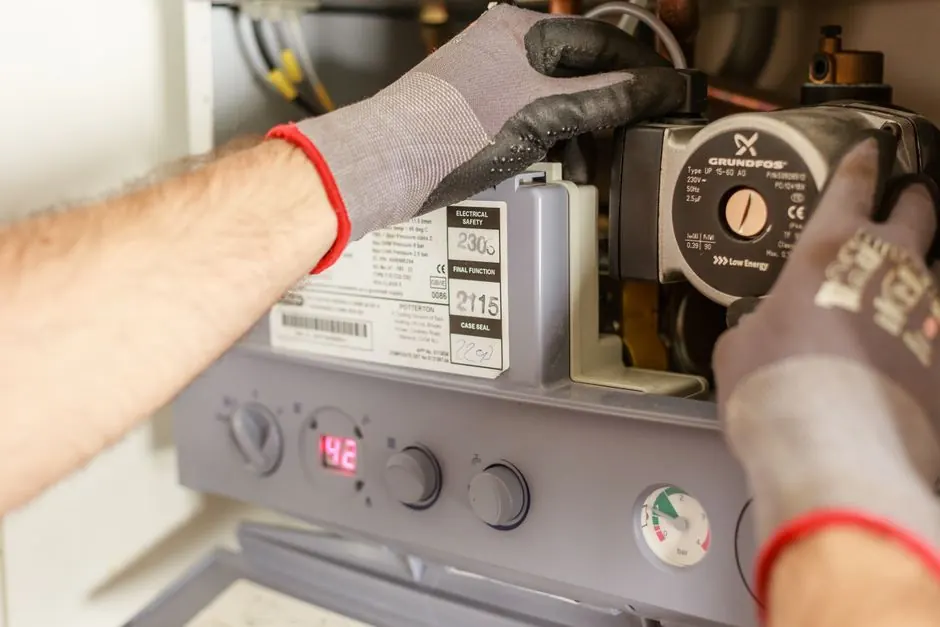
Full system diagnosis
Combustion testing, gas pressure checks, water level and pressure verification, and control diagnostics to find the actual fault.
Emergency boiler repair covers diagnosis and repair of sudden failures in residential steam and hot-water boilers. It includes the service call, full system testing, a written quote, the repair itself, and post-repair safety verification. It does not include full system replacement (quoted separately), cosmetic work, or unrelated plumbing and electrical repairs beyond the heating system.
Combustion testing, gas pressure checks, water level and pressure verification, and control diagnostics to find the actual fault.
Igniters, thermocouples, pumps, zone valves, relief valves, gaskets, and controls replaced with matching parts from van stock when available.
Carbon monoxide testing at the flue and in the living space, plus verification that all safety controls function correctly.
Systems are refilled to 12-15 psi, radiators bled, steam boilers brought up slowly, and operation verified across all zones.
You see the failed part, hear why it failed, and get simple pointers - gauge checks, what noises mean trouble - to catch the next issue early.
Emergency Boiler Repair in Newark is urgent diagnostic and repair work that restores heat when a boiler fails, leaks, or becomes unsafe. A technician arrives with combustion analyzers, manometers, and common replacement parts, then works through the system methodically: fuel supply, ignition, controls, water level, and circulation. Most residential boilers in Newark are gas-fired cast-iron units, either steam or hot-water, and the common emergency failures are failed igniters, seized circulator pumps, leaking relief valves, and tripped safety controls.
Newark homeowners call for emergency boiler repair most often in December through February, when overnight temperatures drop into the teens and boilers run around the clock. Warning signs include radiators that stay cold while the boiler runs, banging or rumbling on startup, water pooling under the unit, frequent lockouts needing resets, and any carbon monoxide alarm. Calling at the first sign - rather than after three resets - usually means a smaller repair and a faster return to heat.
Here is exactly what happens from the moment you request emergency boiler repair to the moment your heat is back.
Schedule
Call or book online — a real human picks up and confirms a 2-hour arrival window.
Diagnose
Licensed tech inspects on-site, then walks you through the cause and your options.
Fix
The job is completed to code and done right the first time — no shortcuts, no surprises.
Guarantee
Every job backed by a written workmanship warranty — and we stand behind it.
Combustion analyzer
Measures oxygen, carbon monoxide, and flue temperature to verify safe, efficient burner operation.
Digital manometer
Tests gas pressure at the valve and checks draft in the flue for proper venting.
Multimeter
Diagnoses control boards, thermostats, zone valves, and safety switches electrically.
Thermal imaging camera
Finds cold radiators, hidden leaks, and circulation dead spots without opening walls.
Combustion analysis
Fuel pressure, ignition sequence, and flame signal are tested in order on every no-heat call. This finds the real fault instead of swapping parts by guesswork.
Steam system protocol
Steam systems are checked for proper water level, pressuretrol settings, and venting before any repair. Skipping this step is how steam boilers get damaged.
Post-repair verification
Every repair ends with documented readings: CO levels, gas pressure, system pressure, and temperature rise. The numbers prove the system is safe.
01
What we do: The technician arrives, finds a failed hot-surface igniter, replaces it from the van stock, and verifies clean combustion before leaving.
→ Heat restored the same evening, pipes safe, and the family slept warm. The old pump was shown to them so they could see the failure.
02
What we do: Diagnosis traces it to a corroded return-line fitting. The section is cut out, new pipe fitted, the system refilled slowly, and the low-water cutoff tested.
→ The basement stayed dry, pressure held at 14 psi, and the boiler ran quietly for the rest of the season.
03
What we do: The call is treated as a safety priority. Burners are cleaned, gas pressure corrected, and the flue checked for blockage before the system is cleared for use.
→ The alarm stayed silent, the boiler fired reliably, and the carbon monoxide readings stayed at zero through winter.
Emergency boiler repair in Newark means working with the city's real heating infrastructure. Large parts of Newark - the Ironbound, Vailsburg, Weequahic, and Forest Hill - are filled with pre-1960 homes running original cast-iron boilers, one-pipe steam systems, and radiators that have heated the same rooms for 80 years. These systems are durable but unforgiving: a steam boiler low on water can crack in minutes, and old piping hides leaks behind plaster. Technicians here carry both modern diagnostic tools and the old-school knowledge these systems demand. Service runs across Essex County, with ZIP codes 07103, 07102, and 07105 among the most frequent calls, and winter demand peaks from December through February when overnight lows regularly hit the teens.
Ironbound
Dense blocks of early-1900s rowhouses, many with original steam boilers and radiators needing careful balancing.
Forest Hill
Large older homes with big cast-iron hot-water systems; circulator and zone-valve failures are the common emergency.
Weequahic
Mid-century housing stock mixing steam and hot-water systems; annual safety inspections catch aging controls.
Pre-1960 housing with original steam or hot-water systems
Many Newark homes still run their original boilers with gravity-fed piping or one-pipe steam. Repairs must respect the old system design; forcing modern parts into antique piping causes new problems.
Hard Essex County winters with January lows in the teens
Boilers here run hard for five months straight. Annual servicing before November catches weak igniters, tired pumps, and corroded valves before the coldest weeks expose them.
Newark boiler emergencies follow familiar patterns. Here are the ones technicians see most, what happens if they are ignored, and how they get resolved.
Problem
Indoor temperatures can fall below 50 degrees within hours in January, risking frozen pipes that burst and flood.
Our Fix
Brick City Boiler tests the circulator pump, zone valves, and air in the lines. Most circulation failures are fixed same-visit by replacing the failed pump or valve and bleeding the system.
Problem
A slow leak rots floor joists, grows mold, and can drop system pressure until the boiler shuts down or overheats.
Our Fix
The source gets traced - often a weeping relief valve, corroded tank fitting, or failed gasket. The faulty part is replaced, pressure is reset to 12-15 psi, and the area is checked for hidden moisture.
Problem
Repeated resets mask the real fault and can allow gas buildup or overheating. Three lockouts means stop resetting and call.
Our Fix
Technicians read the fault history, test the ignition sequence, flame sensor, and safety controls. The root cause - not just the symptom - gets repaired so the lockouts stop.

Emergency boiler repair is about more than getting the heat back on. The right response protects your home from water damage, keeps your family safe from carbon monoxide risks, and prevents a small fault from becoming a full system replacement.
Heat restored fast
A boiler that quits in January can drop indoor temperatures below 50 degrees within hours, which risks frozen pipes and water damage. Emergency boiler repair in Newark gets heat restored the same visit in most cases, with technicians arriving prepared to diagnose and fix common failures on the spot.
Safety checked first
Leaking boilers, cracked heat exchangers, and blocked flues can release carbon monoxide or flood a basement. A trained technician checks combustion safety, tests for CO, and shuts down anything dangerous before starting the repair, so your home is safe first and warm second.
Small fix stays small
A failed circulator pump or stuck zone valve is a few-hundred-dollar fix. Ignore it and you can crack a heat exchanger or flood a basement, turning a simple repair into a full replacement. Acting fast on warning signs almost always costs less than waiting.
Winter-ready reliability
Newark winters regularly drop into the teens, and many homes here rely on boilers as their only heat source. Emergency repair keeps radiators hot and pipes safe through cold snaps, so a breakdown in February never becomes a household crisis.
Boiler work is a distinct trade from general HVAC. Steam and hot-water systems each have their own physics, controls, and failure modes, and Newark's housing stock - much of it built between 1900 and 1960 - means technicians here work on equipment most techs rarely see. Brick City Boiler focuses on hydronic heating: diagnosing pressuretrol and low-water cutoff faults, servicing cast-iron sectional boilers, balancing steam systems, and keeping older installations running safely under current New Jersey code.

Real answers to the questions we hear most often from local homeowners and property managers.
When a boiler is beyond repair - cracked heat exchanger, obsolete parts, or repair costs near replacement - a new high-efficiency unit restores reliable heat and can cut fuel bills 15-30%.
View Boiler InstallationA planned replacement beats an emergency one. If your boiler is 20+ years old and failing often, replacement during mild weather avoids a mid-winter crisis.
View Boiler ReplacementAnnual tune-ups catch weak igniters, corroded valves, and tired pumps before they fail in January. Maintenance is the cheapest emergency prevention there is.
View Boiler Maintenance & Tune-UpsCold radiators in one room often trace to radiator valves or trapped air rather than the boiler itself. Radiator service restores even heat room by room.
View Radiator Repair & InstallationA faulty thermostat or stuck zone control can mimic boiler failure. Control diagnostics separate thermostat problems from boiler problems fast.
View Thermostat & Heating ControlsActive leaks need immediate attention to prevent water damage and pressure loss. Leak tracing finds the exact failed fitting, gasket, or section.
View Boiler Leak & Pipe RepairThe fastest way to reach Brick City Boiler is a quick call. Tell us what your boiler is doing — no heat, noise, leaks, or just due for a tune-up — and where in Newark or Essex County you are, and we will take it from there.
You call
Tell us what the boiler is doing and where you are. We will ask a few quick questions.
We diagnose
A technician finds the real problem — tested, not guessed.
You get it in writing
Clear written quote before any work starts. No surprises, ever.
Phone
(973) 275-8278Address
Newark, New Jersey
Visit Us
53 Irvine Turner Blvd, Newark, NJ 07103, USA
(973) 275-8278