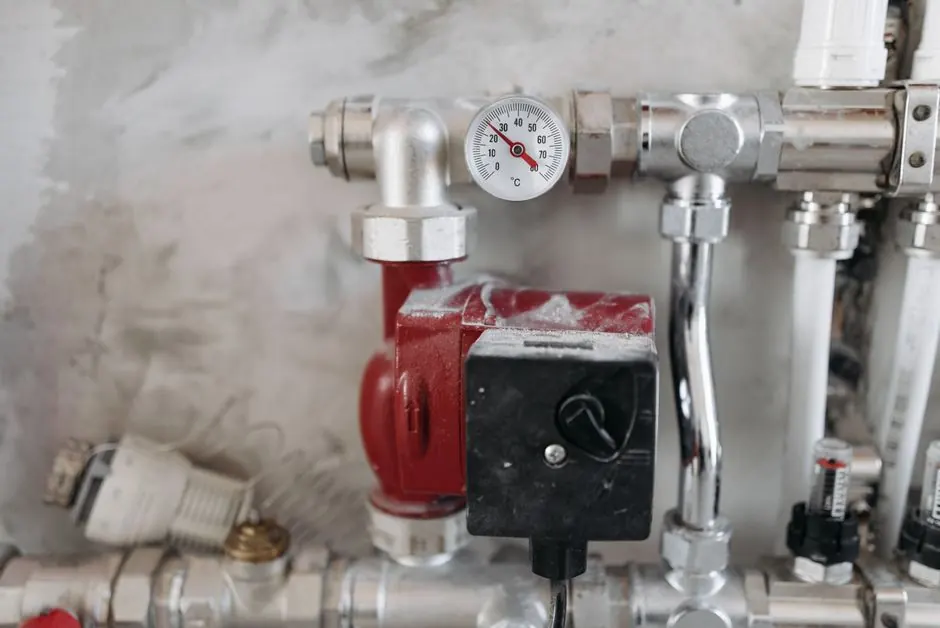
Heat-loss calculation
Manual J calculation of your home's actual heating need, so the boiler is sized correctly - not oversized like most existing units.
Boiler installation covers everything from assessment to final inspection: heat-loss calculation, equipment selection, permits, removal of the old unit, new piping and venting, controls, startup, combustion tuning, and documentation. It does not include unrelated plumbing or electrical upgrades beyond the heating system, asbestos abatement (common in old boiler insulation - quoted separately if found), or oil tank soil remediation.
Manual J calculation of your home's actual heating need, so the boiler is sized correctly - not oversized like most existing units.
Steam, hot-water, or condensing boiler matched to your system type, fuel, and budget, from established manufacturers.
City of Newark permit filing and scheduling of required inspections for gas, venting, and electrical work.
Drain, disconnect, and haul-away of the old boiler, with usable piping preserved and corroded sections replaced.
Burner tuned with a combustion analyzer, safety controls tested, and readings documented. The system is proven before sign-off.
Boiler Installation in Newark is the complete process of sizing, selecting, and installing a new heating boiler - including permits, gas piping, venting, controls, and startup testing. A proper installation starts with a heat-loss calculation (Manual J) that measures your home's actual heating need based on square footage, insulation, windows, and air leakage. That number, not the old boiler's size, determines the new unit. Most Newark homes need 60,000-120,000 BTU, far less than the oversized units installed decades ago.
Newark homeowners typically replace boilers for three reasons: the old unit failed, repair costs are snowballing, or fuel bills are punishing. Oil-to-gas conversions are especially common here, trading oil deliveries and tank maintenance for cleaner, cheaper natural gas. Whatever the reason, the installation follows the same disciplined sequence: assessment and load calculation, equipment selection, permit filing with the City of Newark, removal of the old unit, piping and venting, controls wiring, startup, combustion tuning, and inspection.
A boiler installation is a multi-day project. Here is the sequence, so you know what to expect each day.
Schedule
Call or book online — a real human picks up and confirms a 2-hour arrival window.
Diagnose
Licensed tech inspects on-site, then walks you through the cause and your options.
Fix
The job is completed to code and done right the first time — no shortcuts, no surprises.
Guarantee
Every job backed by a written workmanship warranty — and we stand behind it.
Combustion analyzer
Tunes the burner for safe, efficient firing and documents CO, oxygen, and stack temperature at startup.
Digital manometer
Verifies gas pressure and flue draft meet manufacturer and code requirements.
Pipe threader and press tools
Fabricates clean, leak-free near-boiler piping in steel and copper.
Thermal imaging camera
Verifies even heat distribution across all zones after startup.
Load calculation sizing
Every installation is sized by Manual J heat-loss calculation, never by the old boiler's rating plate. This prevents the oversizing that wastes fuel for decades.
Combustion tuning
Fuel pressure, draft, and flue gas composition are measured and adjusted at startup. The documented readings prove safe, efficient operation.
Steam startup protocol
Steam boilers are filled slowly, skimmed to remove oils, and brought up to pressure gradually. Rushing this step damages new boilers.
01
What we do: Assessment confirms gas availability. The oil tank is removed per NJ rules, gas piping is run, and a new gas boiler is installed and tuned.
→ A new 86% AFUE gas boiler, lower fuel bills from the first month, and no more delivery scheduling or tank worries.
02
What we do: Heat-loss calculation sizes a 120,000 BTU replacement. New near-boiler piping, modern controls, and balanced zones complete the job.
→ Even temperatures in every room, an end to short-cycling, and a system expected to last 20+ years.
03
What we do: A sealed-combustion boiler is installed with direct sidewall venting, eliminating the chimney concern entirely.
→ Reliable heat, zero CO readings, and a system that passes inspection the first time.
Boiler installation in Newark starts with the building, not the boiler. The Ironbound's rowhouses, Forest Hill's large colonials, and Vailsburg's capes each heat differently, and the existing piping - one-pipe steam, two-pipe steam, or hot-water with radiators or baseboard - dictates what equipment fits. Many installations here are oil-to-gas conversions, which means coordinating with the gas utility and removing the old tank. Permits go through the City of Newark, with inspections covering gas piping, venting, and electrical. Work runs year-round, but fall installations (September through November) are ideal: mild weather, no heating emergency, and the system is proven before January. ZIP codes 07104, 07107, and 07106 see frequent replacement work as their mid-century boilers age out.
Ironbound
Tight rowhouses where sectional boilers assembled on-site solve narrow-stairwell access problems.
Forest Hill
Larger homes needing careful heat-loss calculations; oversizing is the most common existing problem.
Vailsburg
Many oil-to-gas conversions; gas availability checks are part of every assessment here.
Many homes lack existing gas service to the boiler location
Oil-to-gas conversions need a gas line run and utility coordination. The assessment verifies gas availability and includes that work in the written quote.
Tight basements and narrow stairwells in older housing
Sectional cast-iron boilers that assemble in place solve access problems. Equipment choice always accounts for how it physically gets into your basement.
These are the situations where a new boiler is the right answer, and what changes after installation.
Problem
Fuel bills far higher per winter month than neighbors with modern equipment, plus the constant worry of a mid-winter failure.
Our Fix
A modern 85%+ AFUE boiler matched to the home's heat loss cuts fuel use 20-30%. The payback on fuel savings alone often lands in 6-9 years.
Problem
No-heat calls every winter, parts on backorder, and a technician who knows the unit is living on borrowed time.
Our Fix
Replacement during mild weather, on your schedule. New equipment with full warranty and parts availability for the next two decades.
Problem
Rooms that never get warm, endless short-cycling, and premature component wear from a boiler twice the needed size.
Our Fix
Heat-loss calculation sizes the new boiler correctly. Right-sized units run longer, quieter cycles and last years longer.

A new boiler is one of the few home upgrades that pays you back every month. The right installation delivers lower fuel bills, even heat in every room, and a heating system you stop thinking about.
Lower fuel bills
Replacing a 30-year-old boiler running at 65% efficiency with a modern 85%+ AFUE unit cuts fuel use by roughly a quarter. For a Newark home spending thousands each winter on heat, that is real money back every year.
Even heat everywhere
Proper sizing and balancing mean every radiator or baseboard gets its share of heat. No more freezing bedrooms while the living room roasts - the whole house holds temperature evenly.
Safer operation
Sealed combustion, electronic ignition, and modern safety controls eliminate the pilot-light worries and CO risks of older atmospheric boilers. Every installation is combustion-tested before sign-off.
Years of reliability
A correctly installed boiler needs little beyond annual servicing. No mid-winter breakdowns, no hunting for obsolete parts, no 2 AM no-heat calls for the next 15-20 years.
Boiler installation is load calculation, system design, and code compliance - not just swapping boxes. Brick City Boiler sizes every installation with a heat-loss calculation based on your home's actual construction, not the old boiler's rating plate. That matters because most existing boilers in Newark are oversized by 30-50%, wasting fuel for decades. Installations follow New Jersey Uniform Construction Code, including proper venting, gas piping, and permit inspections.

Real answers to the questions we hear most often from local homeowners and property managers.
If your current boiler fails suddenly, emergency repair restores heat fast. When the repair quote approaches replacement cost, installation becomes the smarter path.
View Emergency Boiler RepairReplacement is installation focused on an existing system: same process, but the assessment weighs your current boiler's condition against new equipment options.
View Boiler ReplacementAnnual tune-ups protect your investment after installation. Most manufacturer warranties require yearly professional servicing to stay valid.
View Boiler Maintenance & Tune-UpsNew boilers work best with balanced distribution. Radiator service ensures every room benefits from the new system's efficiency.
View Radiator Repair & InstallationModern boilers pair with programmable and smart thermostats for zone control. Upgrading controls during installation maximizes comfort and savings.
View Thermostat & Heating ControlsInstallation includes new near-boiler piping as needed. If your distribution piping leaks, addressing it during installation saves a second project.
View Boiler Leak & Pipe RepairThe fastest way to reach Brick City Boiler is a quick call. Tell us what your boiler is doing — no heat, noise, leaks, or just due for a tune-up — and where in Newark or Essex County you are, and we will take it from there.
You call
Tell us what the boiler is doing and where you are. We will ask a few quick questions.
We diagnose
A technician finds the real problem — tested, not guessed.
You get it in writing
Clear written quote before any work starts. No surprises, ever.
Phone
(973) 275-8278Address
Newark, New Jersey
Visit Us
53 Irvine Turner Blvd, Newark, NJ 07103, USA
(973) 275-8278