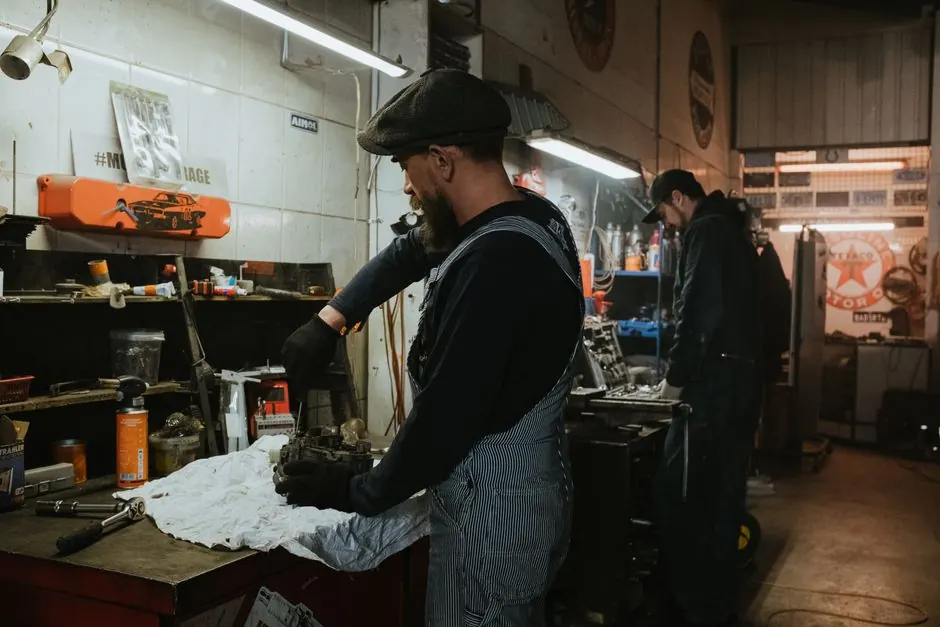
Honest assessment
The existing boiler's condition is documented and the home's heat loss calculated. You see real numbers for both repair and replacement.
Boiler replacement includes assessment, honest repair-vs-replace analysis, heat-loss sizing, equipment selection, permits, removal of the old unit, installation, startup tuning, inspection, and documentation. It does not include asbestos abatement if old insulation tests positive (quoted separately), oil tank soil remediation, or unrelated plumbing and electrical work.
The existing boiler's condition is documented and the home's heat loss calculated. You see real numbers for both repair and replacement.
Steam, hot-water, or condensing unit matched to your system, fuel, and budget from established manufacturers.
Old boiler drained, disconnected, and hauled away. Oil tanks handled per New Jersey requirements on conversions.
City of Newark permits filed and inspections scheduled. Gas, venting, and electrical brought to current code.
Burner tuned with an analyzer, safeties tested, readings documented. The system is proven before you sign off.
Boiler Replacement in Newark is the planned renewal of a worn-out heating system with a modern, efficient unit - sized correctly, installed to code, and proven before winter. Replacement makes sense when the heat exchanger cracks, parts become obsolete, repair bills snowball, or efficiency has fallen so far that fuel waste alone justifies the investment. A good replacement starts with an honest assessment, not a sales pitch: the existing boiler's condition, the home's heat loss, and the math on both options.
Most replacements in Newark follow one of three paths. Like-for-like swaps keep the same fuel and system type - fastest and simplest. Oil-to-gas conversions trade deliveries and tank upkeep for cleaner natural gas. And system upgrades can move from steam to hot-water where the distribution allows, though most homes keep their existing radiators and piping. Whichever path fits, the new boiler is sized by calculation, vented to current standards, and tuned at startup with documented combustion readings.
From first assessment to final inspection, here is how a boiler replacement unfolds.
Schedule
Call or book online — a real human picks up and confirms a 2-hour arrival window.
Diagnose
Licensed tech inspects on-site, then walks you through the cause and your options.
Fix
The job is completed to code and done right the first time — no shortcuts, no surprises.
Guarantee
Every job backed by a written workmanship warranty — and we stand behind it.
Combustion analyzer
Tunes the new burner and documents safe operation with measured CO, oxygen, and stack temperature.
Digital manometer
Verifies gas pressure and flue draft on the new installation meet spec.
Pipe threading equipment
Fabricates clean near-boiler piping connections in steel.
Thermal imaging camera
Confirms even heat distribution across zones after the replacement is running.
Heat-loss sizing
Manual J calculation sizes the replacement to the home's actual heating load. This corrects the oversizing baked into most existing installations.
Failure analysis
The removed boiler's failure is documented - cracked sections, corrosion, efficiency readings - so the replace decision is evidence-based.
Commissioning protocol
New units are tuned at startup with documented flue gas readings, proving safe and efficient operation from day one.
01
What we do: Assessment shows gas available at the street. The tank is removed per NJ rules, gas service is run, and a new gas boiler is installed.
→ A new gas boiler at 86% efficiency, no more oil deliveries, and fuel savings from the first winter.
02
What we do: Heat-loss calculation sizes a 140,000 BTU replacement with modern controls and rebalanced zones.
→ Even heat, 20% lower fuel bills, and no more short-cycling wear on components.
03
What we do: The unit is shut down as unsafe, and a compact modern boiler is installed in the same footprint within the week.
→ Safe, quiet, efficient heat with a 10-year parts warranty and documented startup readings.
Boiler replacement in Newark usually means retiring equipment installed in the 1980s or 1990s - or earlier. In the Ironbound and Vailsburg, original oil boilers from the post-war era are still limping along, while Forest Hill's larger homes often run oversized units from 1970s renovations. The replacement process respects what is already there: sound distribution piping is reused, and the new boiler is matched to the existing steam or hot-water system. City of Newark permits and inspections apply to every replacement, and fall is the ideal season - mild weather, flexible scheduling, and a full winter to prove the new system. Frequent replacement ZIP codes include 07104, 07107, 07103, and 07102.
Vailsburg
High concentration of aging oil boilers; conversions to gas are the most common replacement here.
Ironbound
Older rowhouses where compact modern boilers free up basement space the old units wasted.
Forest Hill
Large homes where correcting decades of oversizing delivers the biggest efficiency gains.
Many Newark boilers are 25-40 years old and past economic repair
Heat exchanger cracks and obsolete controls are common findings. The assessment documents the unit's real condition so the replace decision rests on facts.
Oil heat still common in parts of Newark and surrounding towns
Oil-to-gas conversions are a large share of replacements. Gas availability, tank removal rules, and payback math are covered in every conversion quote.
These are the tipping points where Newark homeowners stop repairing and start replacing.
Problem
pouring money into yearly repairs on a unit worth less than the parts going into it, plus the risk of a mid-winter failure.
Our Fix
Replacement ends the cycle. One planned project replaces years of emergency calls, and the new warranty covers parts for a decade.
Problem
A cracked exchanger can leak carbon monoxide into the home. This is a replace-immediately finding, not a repair.
Our Fix
The boiler is shut down made safe, and replacement is scheduled promptly. Temporary heat options are discussed for cold weather.
Problem
Paying 30-40% more for fuel than necessary, every winter, for years - thousands wasted over the boiler's remaining life.
Our Fix
A modern high-efficiency boiler sized to the home's actual load cuts consumption 20-30%, with the savings documented in the proposal.

Replacing a boiler is a decision you make once every 20 years. Done right, it resets your heating costs, your reliability, and your confidence in the system's safety - all at once.
Fuel savings that compound
A new 85%+ AFUE boiler replacing a 65% efficient unit from the 1980s cuts fuel consumption by roughly a quarter. On a steep winter fuel bill, that is serious money back every year for the life of the system.
Reliability reset
No more mid-winter breakdowns, no more hunting obsolete parts, no more 2 AM no-heat emergencies. A new boiler with full warranty means heating becomes something you stop worrying about.
Modern safety standards
Sealed combustion, electronic ignition, and modern safety controls replace pilot lights and aging gas valves. Every replacement is combustion-tested and documented, so safety is verified - not assumed.
A clean slate
Replacement lets you correct decades-old mistakes: oversizing, poor venting, outdated controls. The new system is designed for your home as it is today, not as it was in 1975.
Knowing when to replace - and when not to - is the core skill here. Brick City Boiler evaluates every aging boiler against clear criteria: heat exchanger condition, parts availability, repair history, efficiency, and safety. If repair is the smarter choice, that is what gets recommended, with the reasoning in writing. When replacement wins, the new system is sized by heat-loss calculation and installed to current New Jersey code, with permits and inspections handled.
Real answers to the questions we hear most often from local homeowners and property managers.
When a boiler fails without warning, emergency repair restores heat first. If the failure reveals a cracked exchanger or obsolete parts, replacement follows.
View Emergency Boiler RepairInstallation is the broader service covering new construction and first-time boiler setups, while replacement focuses on renewing existing systems.
View Boiler InstallationYearly tune-ups keep a new boiler at rated efficiency and keep the manufacturer warranty valid for its full term.
View Boiler Maintenance & Tune-UpsReplacement is the ideal time to service radiators - balancing and valve work ensures the new boiler's efficiency reaches every room.
View Radiator Repair & InstallationNew boilers deserve modern controls. Thermostat and zone upgrades installed with the replacement maximize comfort and fuel savings.
View Thermostat & Heating ControlsIf distribution piping leaks, replacement day is the efficient time to address it - one project, one disruption, one inspection.
View Boiler Leak & Pipe RepairThe fastest way to reach Brick City Boiler is a quick call. Tell us what your boiler is doing — no heat, noise, leaks, or just due for a tune-up — and where in Newark or Essex County you are, and we will take it from there.
You call
Tell us what the boiler is doing and where you are. We will ask a few quick questions.
We diagnose
A technician finds the real problem — tested, not guessed.
You get it in writing
Clear written quote before any work starts. No surprises, ever.
Phone
(973) 275-8278Address
Newark, New Jersey
Visit Us
53 Irvine Turner Blvd, Newark, NJ 07103, USA
(973) 275-8278